
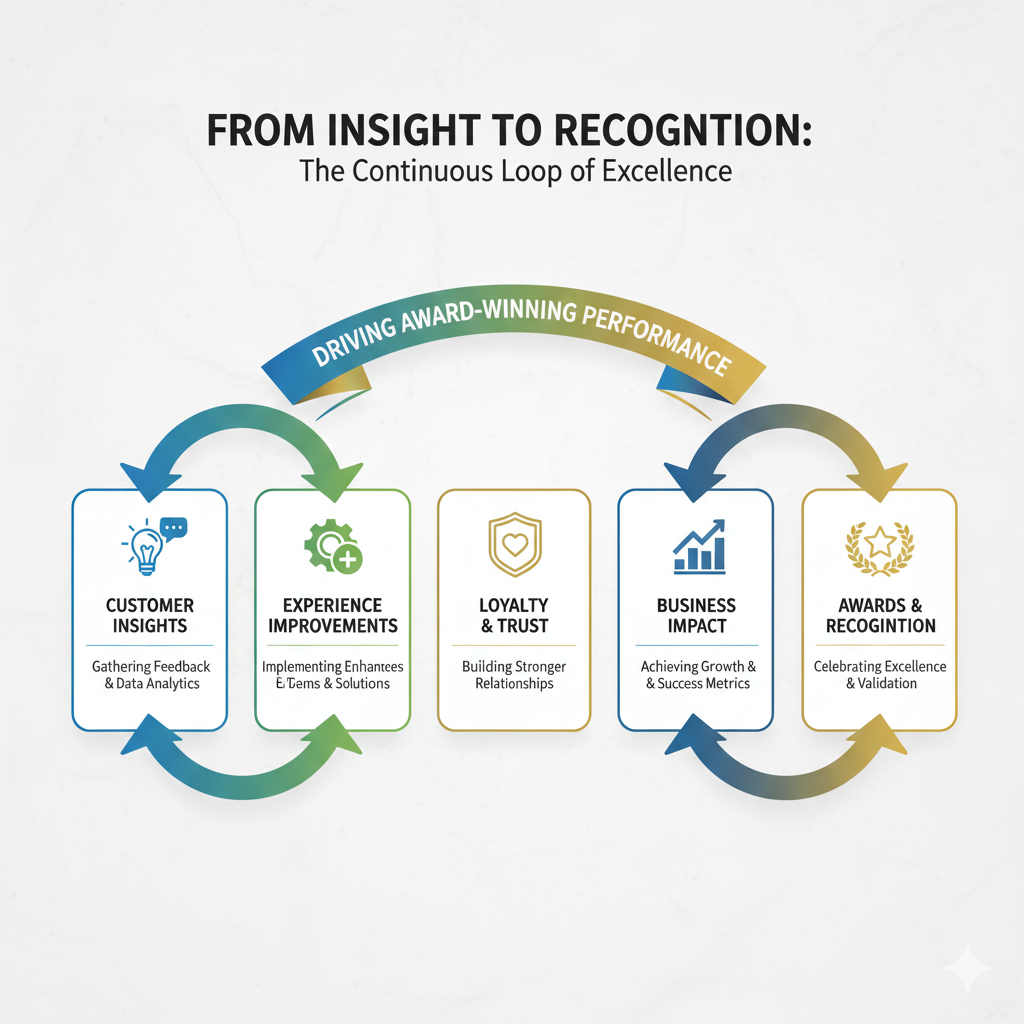
Customer-centric strategies have become a critical benchmark in awards evaluations across industries—from customer experience and HR excellence to innovation and brand leadership. This article explores the core customer-centric practices that distinguish award-winning organizations from the rest.
Customer-Centricity as a Strategic Foundation
At its core, customer-centricity means designing business decisions around customer needs, expectations, and outcomes. Leading organizations go beyond satisfaction metrics to understand the full customer journey, identifying pain points, emotional drivers, and long-term value.
Award-winning companies demonstrate this by:
- Aligning leadership goals with customer outcomes
- Embedding customer metrics into strategic planning
- Treating customer experience as a revenue and reputation driver, not a support function
Judging panels increasingly recognize organizations that show measurable impact from customer-first strategies, rather than aspirational intent.
Leveraging Customer Insights to Drive Excellence
Data-driven customer insight is a hallmark of high-performing organizations. Businesses that earn recognition systematically collect, analyze, and act on customer feedback across multiple touchpoints.
This includes:
- Real-time feedback mechanisms such as surveys, reviews, and digital listening tools
- Advanced analytics to identify trends, unmet needs, and experience gaps
- Closed-loop systems where customer feedback directly informs product, service, and process improvements
Award-winning organizations demonstrate how customer insights lead to tangible enhancements, whether through improved service delivery, reduced friction, or innovative offerings.
Personalization at Scale
One of the most powerful differentiators for recognized brands is their ability to deliver personalized experiences without sacrificing efficiency. Customers increasingly expect relevance—communications, solutions, and interactions tailored to their preferences and context.
Leading businesses achieve this by:
- Segmenting customers based on behavior, not just demographics
- Using technology to personalize interactions across channels
- Empowering frontline teams to adapt experiences in real time
Awards juries value personalization strategies that are ethical, scalable, and demonstrably effective in improving engagement and loyalty.
Empowering Employees to Serve the Customer
Customer-centricity cannot succeed without engaged and empowered employees. Award-winning organizations recognize that employee experience and customer experience are deeply interconnected.
Key practices include:
- Training employees to understand customer expectations and emotional drivers
- Providing autonomy to resolve customer issues without excessive escalation
- Recognizing and rewarding customer-focused behaviors internally
Many excellence and HR awards highlight organizations that build a service culture where employees are advocates for the customer, not just executors of policy.
Seamless Omnichannel Experiences
Customers interact with brands across multiple channels—digital platforms, physical locations, customer support, and social media. Award-winning businesses focus on consistency and continuity across these touchpoints.
Successful omnichannel strategies involve:
- Unified customer data systems that prevent information silos
- Consistent brand tone, service standards, and responsiveness
- Smooth transitions between channels without loss of context
Recognition programs increasingly prioritize organizations that demonstrate frictionless, end-to-end customer journeys rather than isolated channel improvements.
Proactive Problem-Solving and Trust Building
Customer-centric leaders do not wait for complaints; they anticipate issues before they escalate. Proactive communication, transparency, and accountability are key drivers of trust—an essential factor in award recognition.
Examples include:
- Predictive analytics to identify potential service failures
- Transparent communication during disruptions or change
- Clear ownership and resolution timelines for customer concerns
Trust-driven customer strategies often translate into higher retention, stronger brand equity, and positive recognition from both customers and award juries.
Measuring What Truly Matters
Award-winning organizations move beyond vanity metrics. While Net Promoter Score (NPS) and satisfaction ratings remain important, leading businesses link customer metrics to business outcomes.
Advanced measurement frameworks may include:
- Customer lifetime value (CLV)
- Retention and churn analysis
- Effort scores and emotional engagement indicators
Awards panels favor organizations that demonstrate how customer-centric initiatives deliver sustained business impact, not just short-term gains.
Innovation Rooted in Customer Needs
Innovation is most powerful when it solves real customer problems. Recognized organizations consistently demonstrate that their innovations—whether technological, operational, or experiential—originate from customer insight.
This customer-led innovation approach ensures:
- Higher adoption rates
- Faster time-to-value
- Stronger differentiation in competitive markets
Award-winning case studies frequently highlight how customer pain points inspired breakthrough solutions.
Conclusion: Customer-Centricity as a Path to Recognition
Customer-centric strategies are no longer optional; they are foundational to long-term success and industry recognition. Award-winning businesses distinguish themselves by embedding customer focus into leadership decisions, employee culture, innovation pipelines, and performance measurement.
As awards programs continue to evolve, one message is clear: organizations that genuinely listen to customers, act on insights, and deliver meaningful experiences will not only win customer loyalty—but also earn lasting recognition on the global stage.
0 Comments