
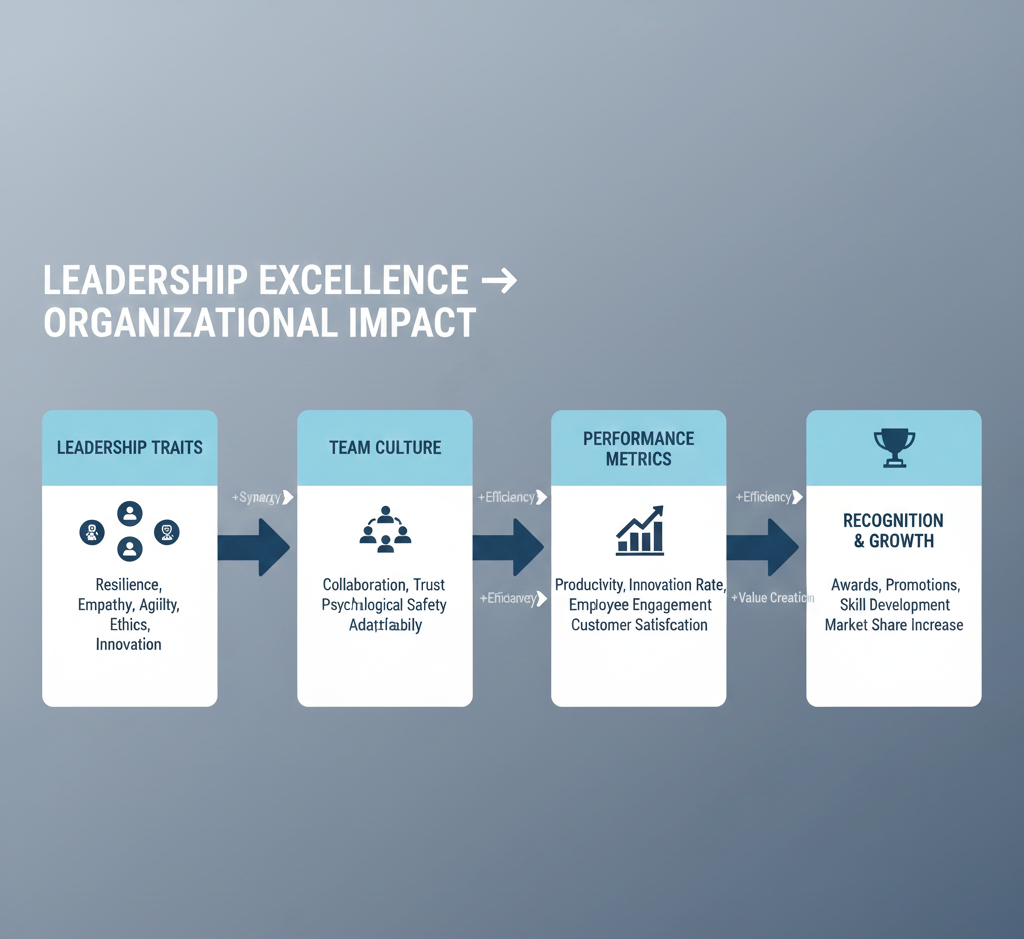
The leadership landscape has transformed profoundly since the pandemic. Traditional command-and-control structures have given way to relational, agile, and emotionally intelligent leadership models. Organizations navigating volatility discovered that resilience, adaptability, and strategic empathy are the capabilities that sustain performance through disruption. Excellence platforms and global award programs increasingly recognize these traits when evaluating leadership distinction. This evolution has elevated leadership quality from a management expectation to a strategic differentiator.
This blog examines the leadership characteristics shaping global recognition, supported by insights from award-winning executives and best practices associated with organizational performance outcomes.
Shifting Leadership Paradigms: What Excellence Now Looks Like
Organizations across industries are redefining excellence through leadership attributes that enable teams to thrive amid uncertainty. Leadership excellence metrics in contemporary awards emphasize qualities such as:
-
resilience and crisis-response capability
-
capacity to inspire psychological safety
-
transparent communication grounded in fact and empathy
-
agility in decision-making
-
proactive upskilling and tech fluency
-
ethical, values-aligned stewardship
These expectations reflect broader workforce and investor priorities. Stakeholders increasingly demand leaders who balance vision with empathy—leaders capable not only of delivering growth, but doing so responsibly and sustainably.
Traits of Modern Leaders Recognized in Excellence Platforms
Leadership award frameworks typically evaluate measurable behaviors and impact. The following traits consistently emerge in recognition criteria:
1. Resilience Paired with Strategic Foresight
Leaders must anticipate disruption, craft multiple scenario pathways, and respond decisively without compromising long-term strategy.
2. Empathy at Scale
Empathy is now a performance capability. Leaders who demonstrate understanding of employee well-being drive trust, engagement, and retention.
3. Adaptive Decision-Making
The ability to pivot based on real-time data and feedback enables sustained competitive advantage.
4. Inclusive and Ethical Leadership
Excellence assessments increasingly include governance, fairness, accessibility, and integrity as core leadership indicators.
5. Innovation Mindset
Leaders must cultivate experimentation and encourage team-driven ideation, recognizing innovation as a continuous discipline.
Insights from Award-Winning Executives
Interviews conducted across excellence forums reveal recurring narratives. Award-recognized leaders consistently report:
-
crisis response required unprecedented communication transparency
-
empathy improved team resilience and output
-
digital transformation accelerated leadership maturity
-
recognition platforms validated investment in people and purpose
-
culture alignment remains the most challenging, yet critical, dimension
A common theme: high-performing leaders attribute their success not only to strategy, but to deliberate human-centered leadership behaviors. They invest in psychological safety, learning ecosystems, and trust-based engagement strategies. These leaders see recognition not as an endpoint, but as reinforcement of leadership responsibility.
How Leadership Quality Shapes Organizational Outcomes
Research across high-performing organizations affirms direct links between leadership excellence and outcomes such as:
-
increased productivity and employee retention
-
improved customer experience and loyalty
-
higher innovation capacity and speed to market
-
stronger talent attraction and employer brand ranking
-
more resilient financial performance during volatility
Organizations with award-recognized leadership profiles typically display:
-
mature coaching cultures
-
clarity of purpose and values alignment
-
robust internal communication frameworks
-
empowered decision autonomy at multiple levels
Such outcomes reinforce the strategic importance of contemporary leadership competencies. Excellence is not accidental; it emerges from deliberate investment in capability building.
Conclusion
Leadership excellence is being redefined for a post-pandemic world. Leaders now face heightened expectations: to exercise resilience, empathy, agility, and ethical stewardship. Excellence platforms recognize—and reward—leaders who demonstrate these qualities while delivering measurable organizational outcomes.
CEOs, emerging leaders, and executive coaches must integrate these shifts into leadership development strategies. Organizations that cultivate these traits not only improve operational performance, but elevate their brand, credibility, and recognition potential in a global marketplace where leadership quality is a strategic asset.
0 Comments